


 Deutsch
 English
 Español
 Français
 Nederlands
 Português


 Share
Share




Geoeconomic confrontation has surged to the top of the World Economic Forum's 2026 Global Risks Report, with US tariffs increasing sixfold in 12 months and 72% of trade professionals citing tariff volatility as the most impactful regulatory change. As 65% of companies change sourcing patterns and friendshoring accelerates, the global trade architecture is being fundamentally rewritten — with direct consequences for food prices, energy costs, and strategic supply chains. This article analyzes the structural shift from efficiency-driven globalization to security-driven fragmentation, and what it means for businesses, policymakers, and consumers worldwide.
Geoeconomic Confrontation: The Top Global Risk in 2026
The World Economic Forum's Global Risks Report 2026, released in January, identifies geoeconomic confrontation as the most likely trigger of a material global crisis this year, selected by 18% of the roughly 1,300 surveyed experts. This marks a dramatic rise from third place in 2025. The report describes an era where trade, finance, and technology are wielded as instruments of geopolitical influence, with multilateralism in retreat. Half of respondents anticipate a turbulent or stormy global outlook over the next two years, with only 1% predicting calm. The WEF Global Risks Report 2026 warns that economic risks like downturn and inflation have surged eight positions year-on-year, while environmental concerns — though still dominant over the long term — have been deprioritized in short-term planning.
Tariff Volatility Reaches Unprecedented Levels
The Thomson Reuters 2026 Global Trade Report, surveying 225 trade professionals, reveals that US tariff volatility has nearly doubled as a concern year-over-year. A staggering 72% of respondents now cite US tariff volatility as the most impactful regulatory change, up from 41% in 2025. The so-called "Liberation Day" tariffs of April 2025 — imposing a minimum 10% baseline tariff on nearly all imports — created lasting disruption, even though parts were later ruled unconstitutional in February 2026. According to the Tax Foundation, the 2026 Trump tariffs amount to an average tax increase of $700 per US household. The 2025 US trade war impact analysis by CEPR found that global welfare losses could reach up to 2% under full retaliation scenarios, with sectors like electrical equipment and transport equipment hit hardest.
Corporate Responses: Sourcing Shifts and Cost Absorption
Companies are responding to the new tariff environment with unprecedented supply chain restructuring. According to the Thomson Reuters report, 65% of firms are changing sourcing patterns, 57% are renegotiating supplier contracts, and 51% are pursuing nearshoring or reshoring strategies. Notably, 39% of companies are absorbing tariff costs rather than passing them on to customers — triple the rate of 13% a year earlier. Supply chain management has become the top strategic priority for 68% of respondents, up from 35% in 2025. Trade departments are gaining strategic influence, with 43% receiving enhanced procurement decision-making authority. Technology adoption is surging, with 40% of firms exploring AI or blockchain for trade management, up from just 6% in 2024.
Friendshoring and Supply Chain Fragmentation
The shift toward friendshoring — moving production to geopolitically aligned countries — is accelerating rapidly. The US CHIPS Act ($52.7 billion for semiconductors) and the EU Green Deal Industrial Plan are driving this transformation. Most affected sectors include semiconductors, critical minerals (China controls ~80% of rare earth processing), pharmaceuticals, and defense technology. Economists warn that trade fragmentation could cut intermediate goods trade by 19-25%. The friendshoring geopolitical supply chains trend represents a partial reversal of globalization, with countries offering stable trade relationships — such as India, Vietnam, Mexico, and the UAE — emerging as key supply chain intermediaries.
Impact on Consumers: Higher Prices and Strained Budgets
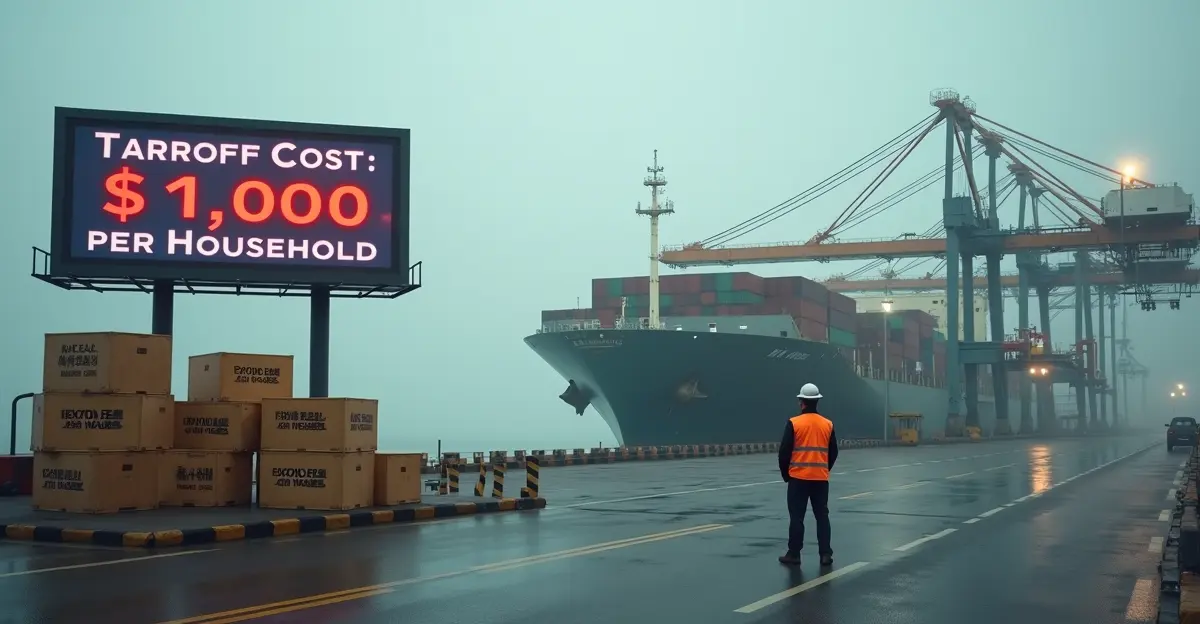
American consumers bore 90% of last year's nearly six-fold tariff increase, adding $1,000 to $2,400 to average household budgets, according to Forbes. Despite overall inflation dropping to 2.4% in January 2026, tariff-driven price increases persist for imported goods. Food, healthcare, and transportation costs have worsened, while lower-income households bear the brunt. Nearly 70% of small businesses surveyed plan price increases of 4% to 10% in coming months. The IMF's April 2026 World Economic Outlook projects global growth at 3.1% in 2026 and 3.2% in 2027 — below pre-pandemic averages — with downside risks dominated by deepening geopolitical fragmentation and renewed trade tensions. The IMF economic forecast 2026 warns that trade fragmentation is raising costs and reducing productivity, as corporate investment is diverted toward resilience (duplicate factories, redundant logistics) rather than innovation.
Expert Perspectives
"Geoeconomic confrontation has become the defining risk of our era," said Saadia Zahidi, Managing Director of the World Economic Forum. "The retreat from multilateralism threatens the cooperation needed to address global challenges from climate change to technological governance." Meanwhile, Thomson Reuters notes that trade departments are evolving from back-office cost centers into strategic business functions, positioning themselves as architects of organizational resilience in an era of permanent volatility.
Frequently Asked Questions
What is geoeconomic confrontation?
Geoeconomic confrontation refers to the use of economic tools — such as tariffs, sanctions, export controls, and investment restrictions — by countries to achieve geopolitical objectives. It has become the top global risk in 2026 according to the WEF.
How much have US tariffs increased?
US tariffs increased nearly sixfold in the 12 months through early 2026, with the average tariff rate rising from around 2.5% to over 14%, according to the Tax Foundation. The April 2025 "Liberation Day" tariffs imposed a minimum 10% baseline on nearly all imports.
What is friendshoring?
Friendshoring is the practice of shifting supply chains and production to countries that are politically and strategically aligned, rather than to the lowest-cost producer. It prioritizes resilience and security over efficiency.
How are companies responding to tariff volatility?
According to the Thomson Reuters 2026 Global Trade Report, 65% of companies are changing sourcing patterns, 57% are renegotiating supplier contracts, 51% are pursuing nearshoring, and 39% are absorbing tariff costs rather than passing them to customers.
What is the economic impact of trade fragmentation?
The IMF projects global growth of just 3.1% in 2026, below historical averages. Trade fragmentation could cut intermediate goods trade by 19-25%, while corporate investment is increasingly diverted toward supply chain resilience rather than innovation and expansion.
Conclusion: A New Era for Global Trade
The evidence is clear: the era of efficiency-driven globalization is giving way to a security-driven, fragmented trade architecture. With 76% of trade professionals believing current tariffs represent a permanent four-year shift, businesses must adapt to a world where supply chain resilience is paramount. Policymakers face the challenge of managing geopolitical competition without triggering a full-blown trade war that could push the global economy into recession. For consumers, the immediate cost is higher prices — but the longer-term cost may be a less prosperous, more fragmented world.
Sources
- World Economic Forum, Global Risks Report 2026
- Thomson Reuters, 2026 Global Trade Report
- Tax Foundation, Tariff Tracker 2026
- CEPR, "Roaring Tariffs: The Global Impact of the 2025 US Trade War"
- IMF, World Economic Outlook, April 2026
- Forbes, "Consumers Are Paying More in Tariffs as Inflation Cools," February 2026
- UNCTAD, Global Trade Update, April 2026



Follow Discussion